
You've got your call-up letter and a few days before reporting to camp. You're probably asking the same thing every corps member asks: what actually goes in that bag?
Here's the short version: your original documents with photocopies, a white-on-white kit and jungle boots, basic toiletries, a mattress and mosquito net, a phone with a power bank, small cash denominations, and any personal medication you take daily. Everything else works around that foundation.
This checklist comes from feedback I've gathered directly from corps members I've mentored before, during, and after their service year. It isn't a template recycled from an old PDF. It's built from what actually got used at camp, what sat unused at the bottom of a bag, and the small mistakes that cost people time and money on arrival day. I've also checked it against current National Youth Service Corps guidance ahead of the 2026 service year, so you can pack with real confidence instead of guesswork.
Keep a printed or saved copy of this list on your phone and tick items off as you pack. It stops the classic camp-gate panic of patting down your bag for a document you swore you brought.
What Goes in Your Bag First
Before anything else, every corps member needs to cover these seven categories:
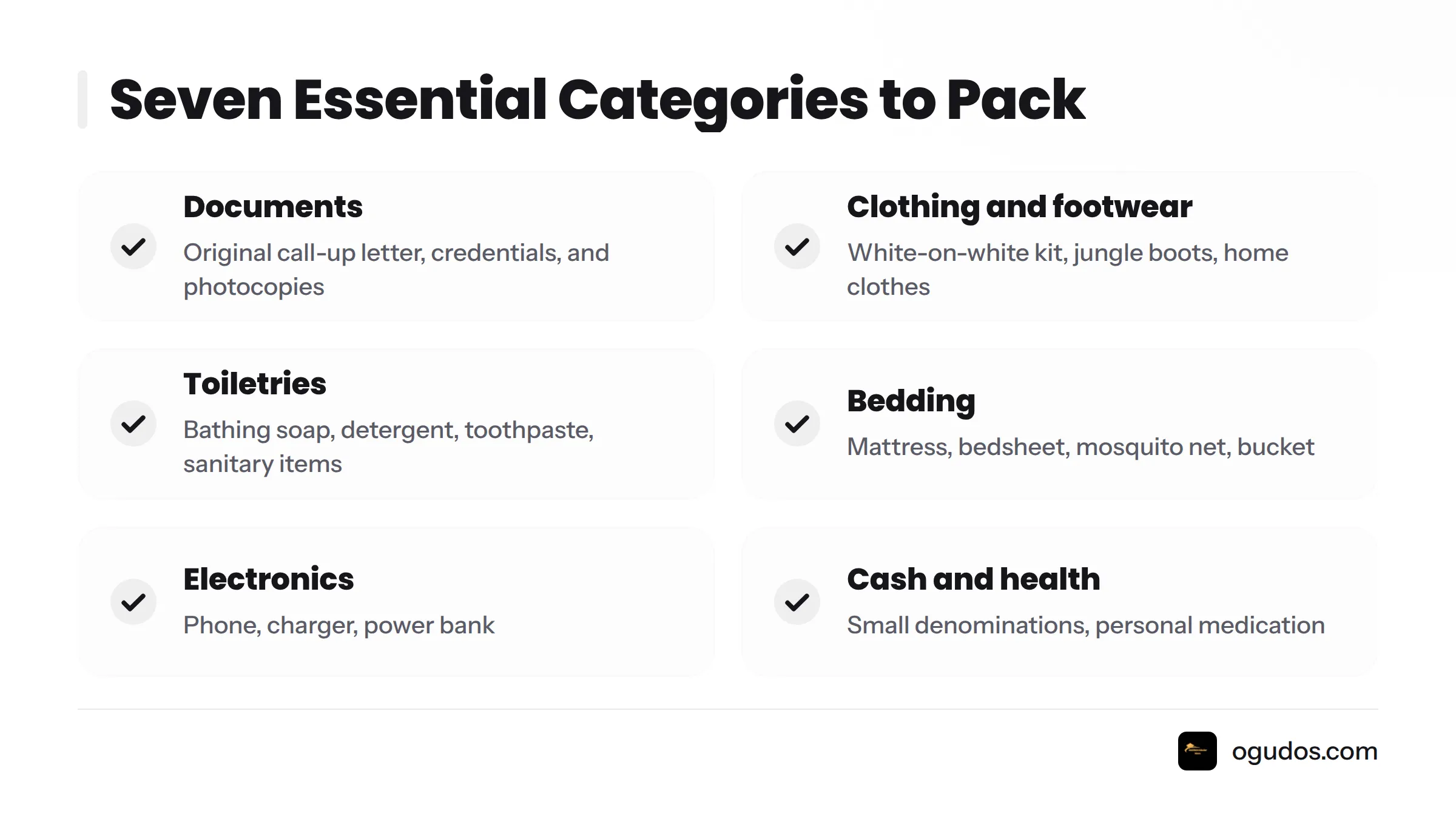
Documents: original call-up letter, credentials, and photocopies
Clothing and footwear: white-on-white kit, jungle boots, home clothes
Toiletries: bathing soap, detergent, toothpaste, sanitary items
Bedding: mattress, bedsheet, mosquito net, bucket
Electronics: phone, charger, power bank
Cash and health: small denominations, personal medication
Items to avoid: anything banned at your camp
The sections below break each category down, with notes for female corps members, what's mandatory versus optional, and the mistakes that trip up first-timers every intake.
Documents You Can't Forget
Your documents matter more than anything else in your bag. Camp officials won't let you register without them, and a missing paper means standing in a separate queue for hours while everyone else settles into their platoon. Carry these as originals unless I note otherwise:
Original NYSC call-up letter
Original degree or HND certificate (or your institution's letter of attestation if the certificate isn't ready yet)
Statement of result or academic transcript
Student ID card or valid means of identification
Eight to ten passport photographs on a white background
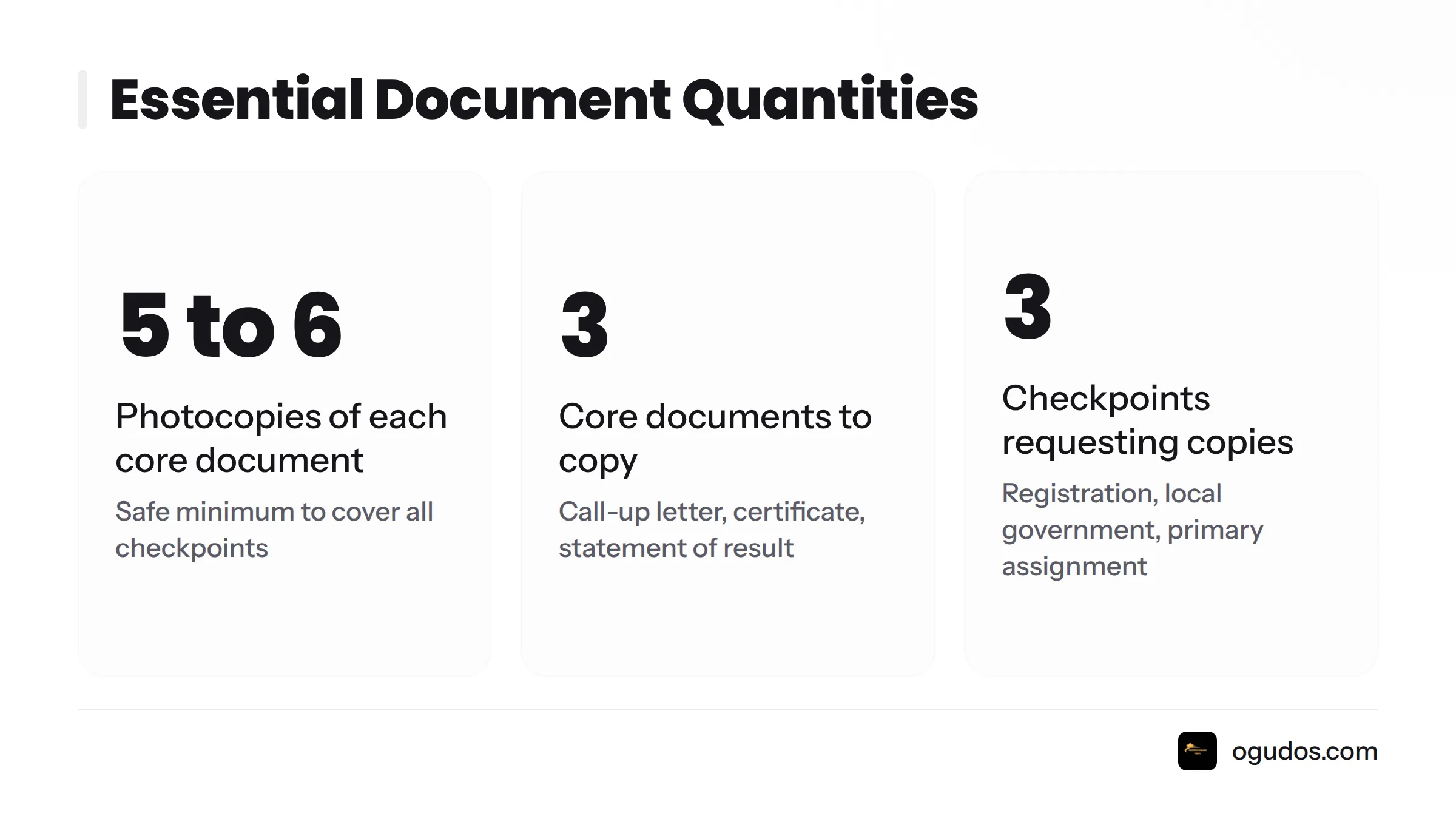
Photocopies are just as important. Based on feedback from corps members, five to six photocopies of each core document (call-up letter, certificate, statement of result) is a safe number. Camp registration desks, your local government inspector, and your place of primary assignment will each ask for a set at different points. Buying photocopies inside camp costs more and wastes registration-day time you don't have.
The Most Common Document Mistake
The single most repeated mistake I hear about is packing only two or three photocopies "to save weight," then scrambling to find a working photocopier inside camp, where queues are long and prices are inflated. The second mistake is submitting an original document when a copy was all that was required, then struggling to retrieve it later. Keep originals and copies in separate, clearly labeled envelopes inside a document folder. This stops you from handing over the wrong one under pressure at the gate.
Clothing and Footwear Standards
Camp has a dress code. Getting it wrong on day one is an easy way to stand out for the wrong reasons. The core of your wardrobe is white-on-white: a plain white vest or round-neck T-shirt paired with plain white shorts, worn during drills, parades, and early morning exercises. Pack these:
White vest and white shorts (at least two sets)
Plain white T-shirts for general camp wear
Jungle boots (the standard-issue footwear for drills and parades)
Comfortable slippers or sandals for moving around the hostel
A cardigan or light jacket for cold mornings and evenings, especially in camps in cooler states
A few sets of home clothes for free days and after-hours relaxation
What Female Corps Members Should Pack
Pack extra underwear and several changes beyond what feels like "enough." Laundry access during the first days of camp is limited, and lines at the washing area get long. A headscarf or hijab, if that's part of your practice, is fine to bring alongside your standard white-on-white kit. Pack sanitary pads or your preferred menstrual product in a quantity that covers the full camp period. The camp mart doesn't always stock your preferred brand. A light scarf or shawl also provides extra coverage during chilly mornings or long outdoor ceremonies.
This video shows a corps member's real 24-hours-before-camp packing routine, walking through many of these essentials in practice:
Toiletries and Personal Care Items
Pack toiletries for roughly three weeks, the typical length of orientation camp. Resist the urge to bring full-size everything. Core items include:
Toothbrush and toothpaste
Bathing soap and a sponge
Laundry detergent or bar soap for washing clothes
Body cream or lotion
Sanitary items (for female corps members)
A small towel and bathroom slipper
What Actually Gets Used
Corps members tell me the same thing consistently: they overpacked toiletries and underpacked patience. Large bottles of shower gel, full-size lotion tubs, and backup soap bars for "just in case" mostly went untouched. The camp mart sells supplies if you run low. Travel-size or repackaged portions free up real space for things you can't easily buy inside camp, like your documents or your mattress.
Bedding and Sleeping Setup
Camp hostels provide bunk space, not bedding, so this category isn't optional. Pack:
A mattress, usually a thin foam type that's easy to carry and fold
A bedsheet and a light blanket or wrapper
A mosquito net (shared hostels, basic ventilation, and real mosquito-borne illness risk in most camp locations)
A bucket for bathing and hand-washing clothes
A water keg or jerrycan for fetching and storing water (taps often run on a schedule, not constantly)
A small padlock to secure your box or bag (hostel rooms house many corps members, and personal lockers are shared or absent)
A padlock seems minor until the first week, when corps members flag it as one of the few items they wish they'd bought a spare of. Hostel storage is communal, and a lost key means an awkward wait for a locksmith inside camp.
Your Phone and Power Supply
You're allowed a phone at camp, and most corps members keep one throughout the three weeks for family communication and camp-related updates. Pack:
Your phone and its charger
A power bank, charged before you travel
Why a Power Bank is Essential
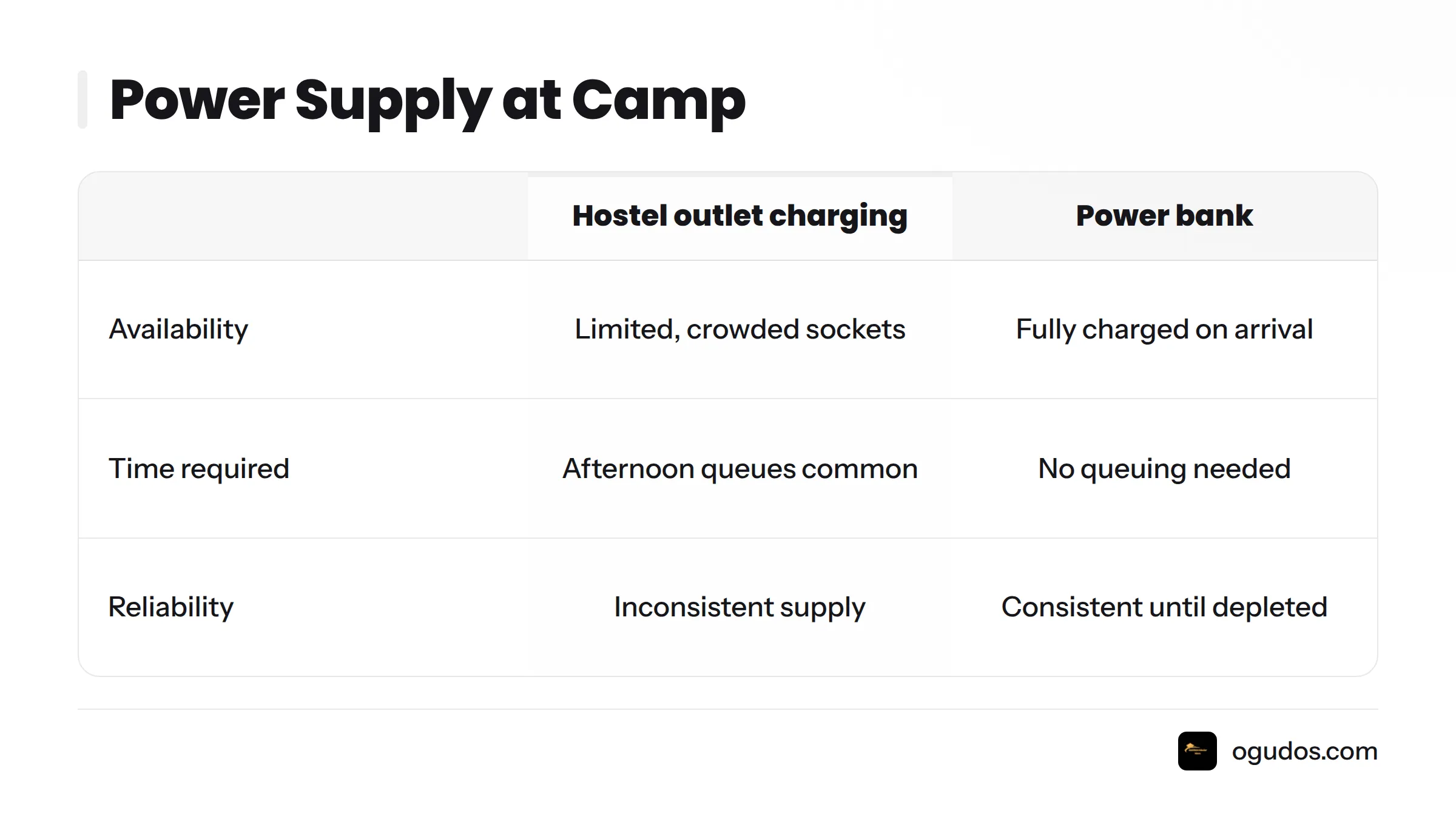
Camp power supply is inconsistent, and charging points in hostels get crowded fast. Dozens of corps members compete for a handful of sockets. Corps members who skipped the power bank described spending entire afternoons queuing just to get enough charge to call home. A fully charged power bank solves this on day one and remains one of the most repeated "glad I packed that" comments I hear from corps members after camp.
This video covers similar power and essentials planning for anyone reporting to NYSC Batch C2 2026:
Cash and Health Basics
Carry cash in small denominations rather than large notes. Camp vendors, bike riders, and mart stalls often can't break a large note, and corps members describe losing money in rushed, informal exchanges just trying to get change. A mix of smaller notes covers meals, camp mart purchases, and incidentals without that friction.
For health, pack:
Any personal medication you take regularly, in its original packaging with enough supply for the full camp period
A basic first-aid kit: pain relievers, antiseptic cream, plasters, and oral rehydration salts
Insect repellent as a backup to your mosquito net
If you manage a chronic condition, declare it at camp registration so the camp clinic has a record. Camp medical facilities exist for this reason, and corps members with documented conditions are generally given appropriate consideration during activities.
Items Banned at Camp
Camp rules on prohibited items exist mainly for safety and discipline. The exact list can vary slightly by camp or year, so check your specific state's directive on the official NYSC portal before you travel. As a general guide, avoid:
Weapons or anything that could be read as one, including pocket knives
Illegal drugs and excessive alcohol
Expensive jewelry or large amounts of cash kept visible
Non-essential electronics like gaming consoles, which add bulk and risk
Items considered indecent or against the camp dress code
Because enforcement and specifics shift by state and intake, always check the directive attached to your own call-up letter and any notice from your assigned camp rather than relying only on a general list.
Common Questions About Packing
What are the core items for NYSC camp? Your original call-up letter and credentials with photocopies, a white-on-white kit with jungle boots, basic toiletries, a mattress and mosquito net, a phone with a power bank, small cash denominations, and any personal medication.
Which documents are absolutely necessary? Your original call-up letter, degree or HND certificate, statement of result or transcript, student ID, and passport photographs, along with several photocopies of each.
How many photocopies should I bring? Five to six photocopies of each core document covers registration, local government inspection, and your place of primary assignment.
What exactly is white-on-white? A plain white vest or T-shirt paired with plain white shorts, worn for drills, parades, and early morning camp activities.
Do I need to bring my own mattress? Yes. Camp hostels provide bunk space but not bedding, so a thin foam mattress is essential.
Is a mosquito net really necessary? Yes, strongly recommended. Hostels are shared with basic ventilation, and a mosquito net reduces your exposure to mosquito-borne illness during camp.
What toiletries should I pack? Toothbrush and toothpaste, bathing soap, laundry detergent, body cream, a small towel, and sanitary items where needed, ideally in travel-size quantities.
How much cash do I need? Enough to cover roughly three weeks of meals and incidentals, carried mostly in small denominations since vendors often can't break large notes.
What electronics are allowed? A phone and charger are standard, and a power bank is highly recommended given inconsistent camp power supply and crowded charging points.
Why is a power bank so important? Camp power can be unreliable and hostel charging sockets are limited, so a power bank keeps your phone usable without long waits at shared charging points.
What items are generally prohibited? Weapons, illegal drugs, excessive alcohol, visible expensive valuables, and non-essential electronics. Specifics vary by camp and state, so check your call-up letter's directive.
What should female corps members specifically pack? Extra underwear, sufficient sanitary products for the full camp period, a headscarf or shawl where relevant, and a light cardigan for cold mornings, alongside the standard checklist.
Do I need a padlock? Yes. Hostel storage is shared, and a padlock secures your personal box or bag since lockers aren't always private or available.
What footwear do I need? Jungle boots for drills and parades, plus comfortable slippers or sandals for everyday movement around the hostel.
Should I bring my own bucket and water keg? Yes. A bucket is needed for bathing and washing clothes, and a water keg helps you store water since taps often run on a schedule rather than continuously.
What personal medication should I carry? Any medication you take regularly, packed in its original container with enough supply for the full camp period, plus a basic first-aid kit for minor issues.
How many passport photographs do I need? Around eight to ten passport photographs on a white background typically covers camp forms and your green card.
What are the most common packing mistakes? Packing too few photocopies, handing over original documents when copies were required, overpacking toiletries, and forgetting a power bank are the most repeated mistakes.
What items do corps members regret packing? Full-size toiletry bottles, backup soap bars, and non-essential electronics like gaming devices are the items most often flagged as wasted space.
Can I bring my phone? Yes, a phone is allowed and commonly used throughout camp, paired with a charger and ideally a power bank.
What bedding essentials do I need? A mattress, bedsheet, light blanket, and a mosquito net. Hostels only provide bunk space.
Is a cardigan necessary? It's practical rather than mandatory, useful for cold mornings, evening parades, and camps in cooler states.
Do requirements vary by state or year? Yes. Specific rules, especially around prohibited items, can shift by camp location and intake year. Always check the directive attached to your call-up letter or your state's NYSC office.
What goes in hand luggage versus my main bag? Keep documents, cash, phone, and medication in your hand luggage so they're on you at all times. Pack bulkier items like your mattress, bucket, and clothing in your main bag or box.
For a broader walkthrough of what to expect once you've registered, this video offers a useful before-and-after view of the whole process:
Before You Zip Your Bag
Packing for camp is really about separating what you can't do without from what just feels comforting to carry. Documents, white-on-white, bedding, and a power bank earn their space. Everything else competes for room in a bag you'll be carrying through a crowded registration queue.
Before you zip that bag shut, make sure you've also sorted the steps that come before and after camp. Print your NYSC call-up letter correctly so there are no surprises at the gate. Get familiar with the NYSC service-year guide for a fuller picture of what the three weeks and beyond involve. Look into how much corps members earn monthly so your cash planning for camp and after lines up with reality. Once you're through orientation, you'll want to understand the NYSC skills acquisition programme, since SAED sessions start right in camp, and keep the NYSC redeployment process in mind in case your place of primary assignment needs adjusting afterward.
For more guides like this as you move through your service year, visit Ogudos Scholars and explore the wider collection of first-party, mentoring-backed NYSC resources built from real corps member experience rather than recycled checklists.


Comments
Post a Comment